Solutions · Home care
The schedule, the visit, and the timesheet — finally the same fact.
Home care runs on volume: many clients, many staff, many visits a day. The failure mode is reconciliation — hours typed twice, differently. In ClientCentric the clock-out writes the time entry, so payroll starts from what actually happened.
What home care agencies get in ClientCentric: a real month calendar with draft-and-publish scheduling, staff clock-in and clock-out with location captured at those two moments only, visit exceptions queued for review instead of buried, timesheets generated from the clock events with corrections that keep the original, reviewer separation (nobody approves their own hours), pay periods that lock, and credential expiry warnings before the lapse — not after.
Built for the density of home care
- Draft schedules staff cannot see until published — plan freely, publish deliberately
- Clock-in from the staff member's own phone view, with the day's assignments in front of them
- A forgotten clock-out closes automatically after a configured wait, as an exception — never as fake data
- Timesheet corrections preserve the original entry; the audit trail shows both
- Non-client work — training, meetings, travel — scheduled and paid without inventing a fake client
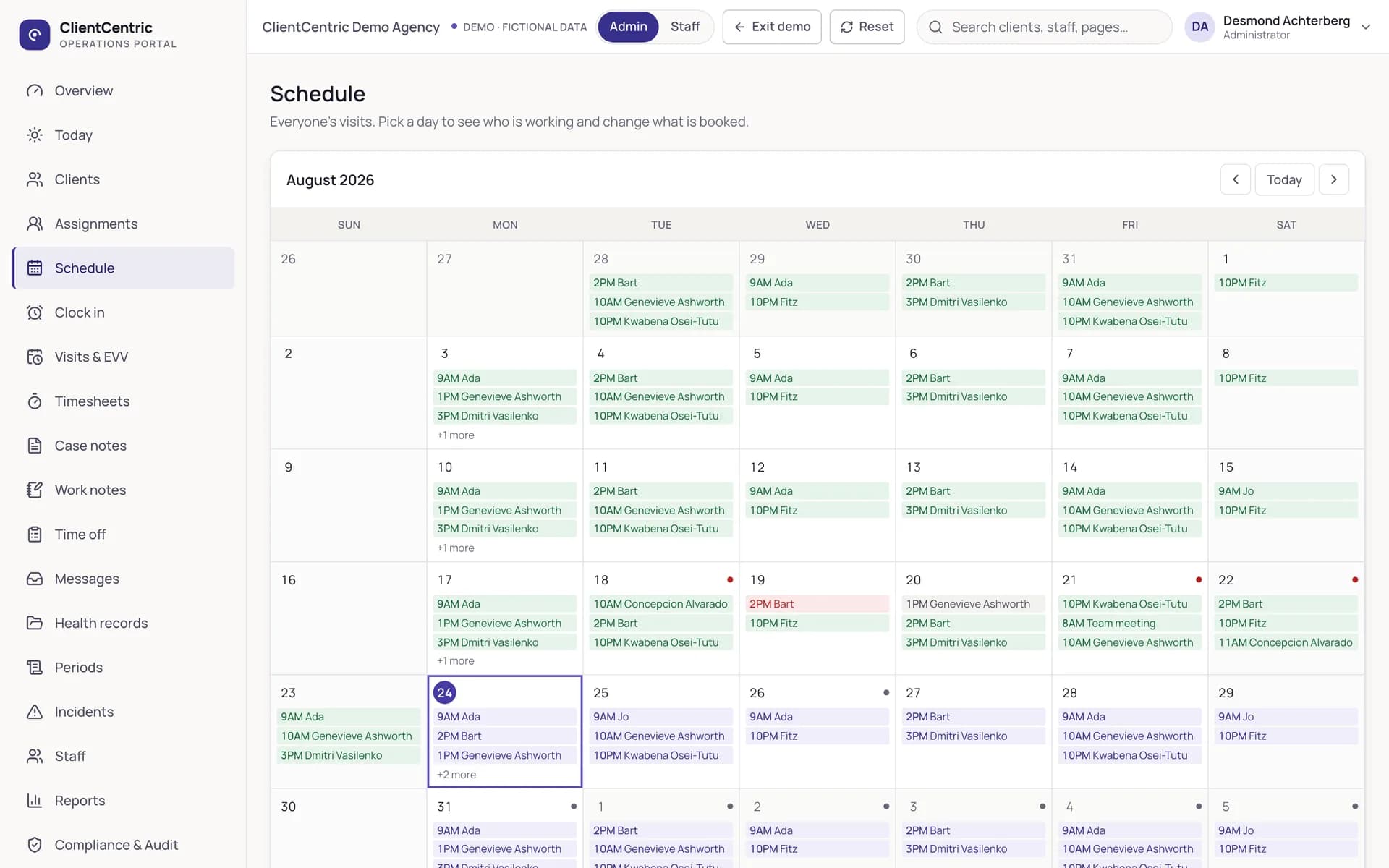
A calendar, not a list wearing one. The month view carries the real density of a home care operation — and every chip opens the visit behind it.
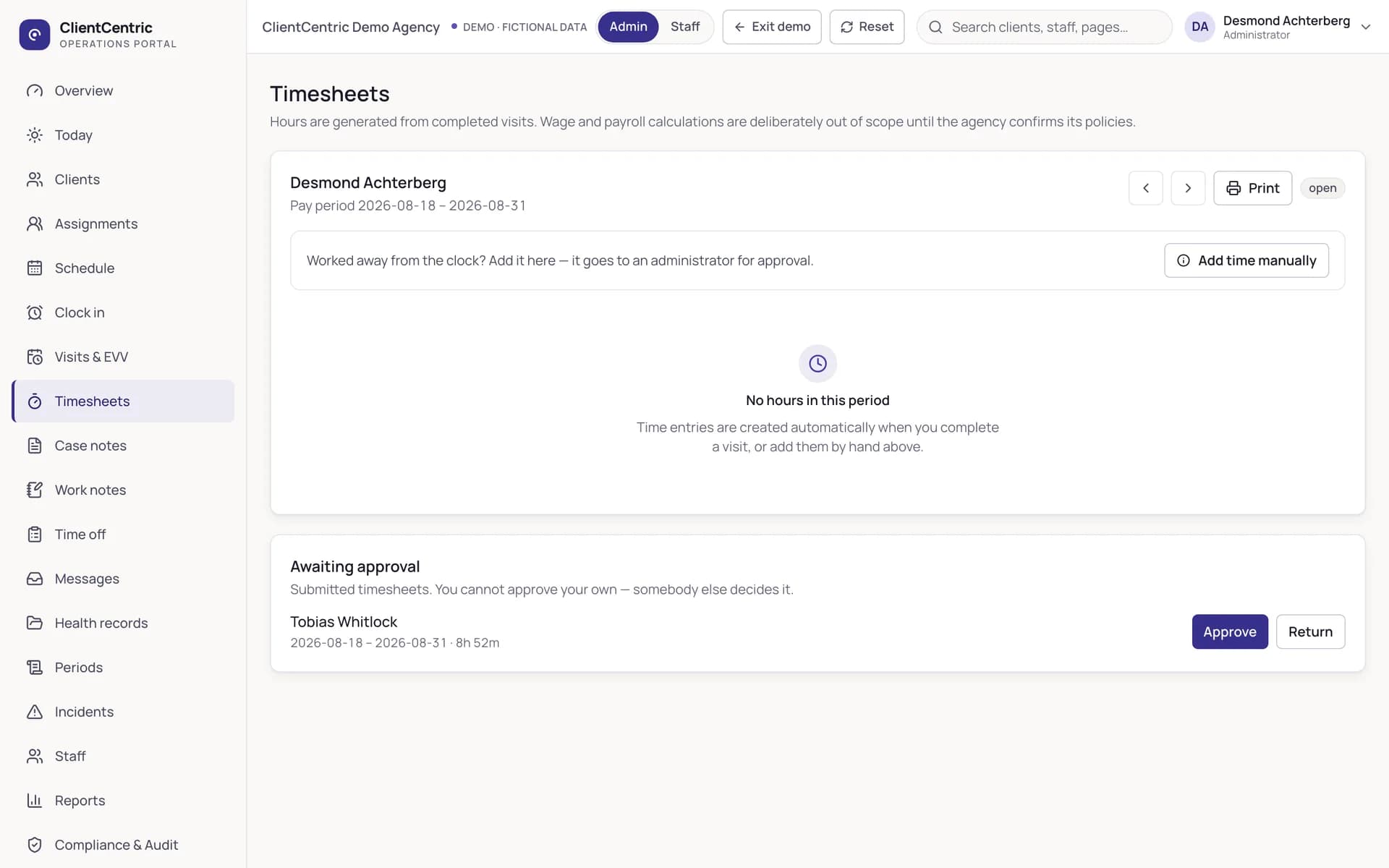
Hours as a consequence. The timesheet is written by the clock-out, reviewed by somebody who is not its owner, and locked by the pay period.
Clock a visit in the staff demoBook a walkthroughNo signup. Fictional data. Everything resets on refresh.
Written and maintained by the ClientCentric team from the working product. Last reviewed .