Solutions · I/DD
Software that knows a goal has a method and a measure.
Providers serving people with intellectual and developmental disabilities document toward outcomes — not just visits. ClientCentric's client record carries goals with method and measure, progress entries against them, support plans, guardians, and consents with expiry, on one record with eleven access-controlled tabs.
Documentation that answers the reviewer's actual questions
A review asks: what was the goal, what was done toward it, who did it, and who checked it. Case notes here follow a real lifecycle — draft, submitted, returned with a reason, approved, locked. A locked note is never edited; corrections are addenda that leave the original exactly as written. That distinction is the difference between documentation and a text file.
- Goals with method and measure, and progress entries recorded against them
- Support plans and services on the same record as the documentation they justify
- Incident reports staff can file directly, routed to review
- Guardians and representatives as first-class contacts with their own consented access story
- Signature documents a client or representative signs with one button
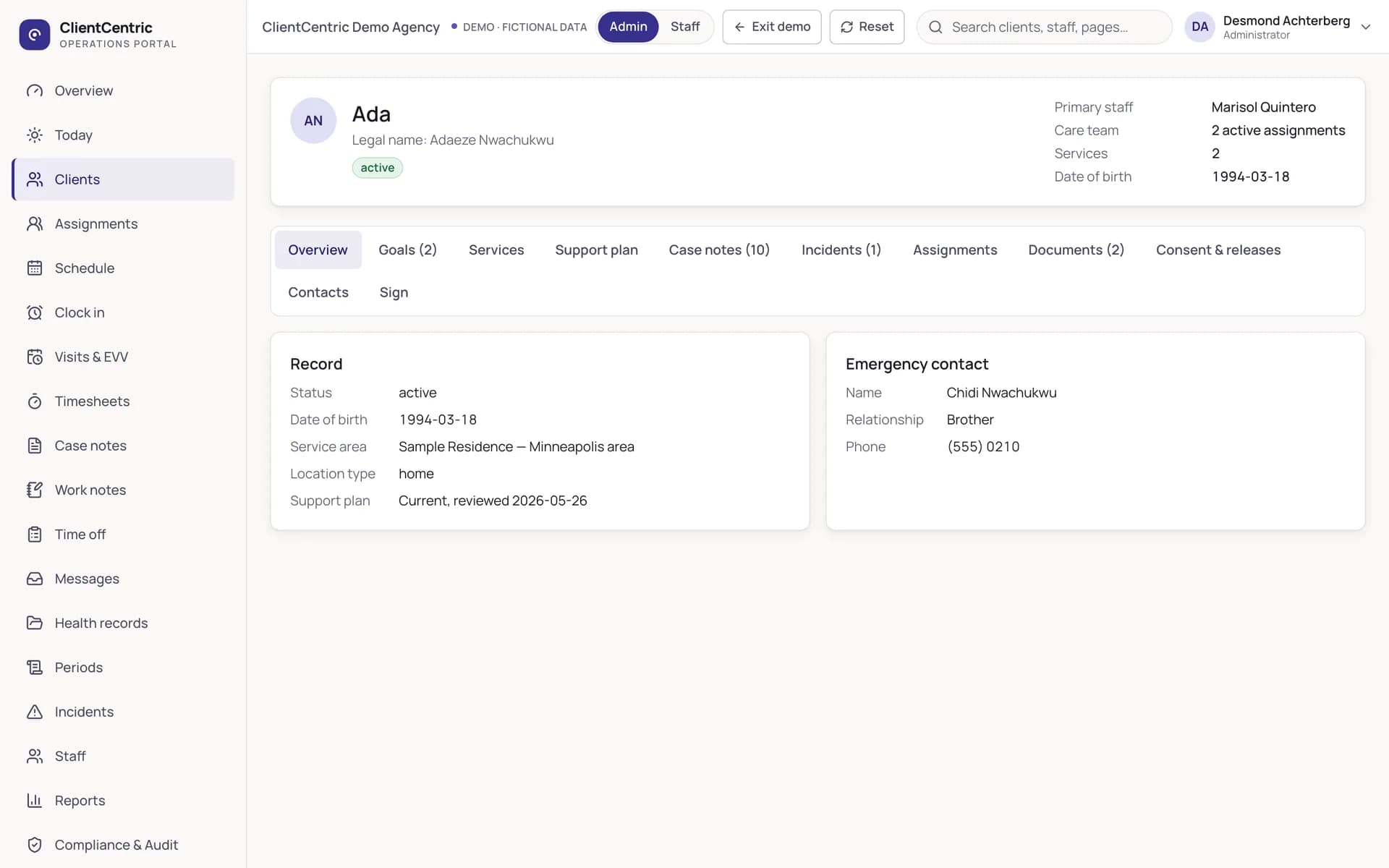
One record, eleven tabs, each its own access surface. Opening the record does not mean seeing everything on it — a staff member sees the tabs their role and assignment justify.
Access that protects dignity, not just data
In I/DD services, the people in the records often live near the people who serve them. Assignment-based access means a staff member sees the clients they are actively assigned to — others are not listed, do not appear in search, and cannot be opened by typing the address. Ending an assignment removes access immediately, and the append-only audit history records who touched what, when.
Written and maintained by the ClientCentric team from the working product. Last reviewed .