Features · Audit
Written for the reviewer who arrives in three years.
An audit trail is only worth what it cannot do: it cannot be edited, cannot be selectively deleted, and cannot have gaps that need explaining. ClientCentric's history is append-only — events are added, never changed.
The questions it answers without archaeology
- Who could see this client's record last March — and what made that true?
- When was this note approved, by whom, and what did the original say before the correction?
- Who exported this report, and when?
- When did this staff member's access to this client end?
- What changed in the agency's configuration, and who changed it?
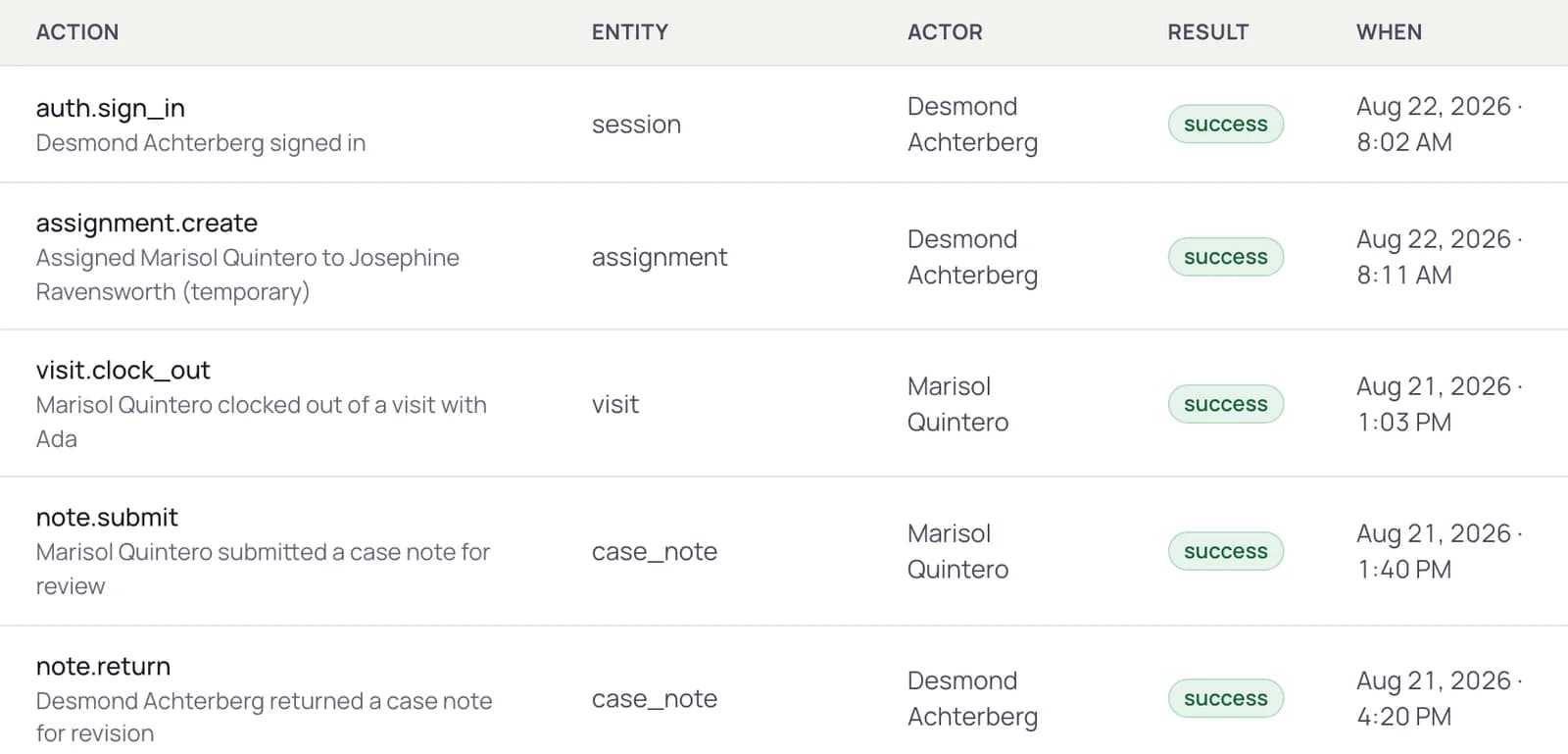
Events, not stories. Each row is an action that happened, attributed and timestamped — the raw material a review is made of.
Why append-only matters more than 'has an audit log'
Many systems have a log. The question a reviewer actually asks is whether the log could have been cleaned up afterward. Append-only means the answer is structurally no: a correction adds a new event alongside the old one; a locked note’s original text survives its own addendum; and the migration that brought your history in wrote its own trail the same way.
Written and maintained by the ClientCentric team from the working product. Last reviewed .