Features · Billing
A claim is only as good as the visit behind it.
Denied claims are rarely a billing problem. They are a visit problem discovered weeks late: EVV that never verified, a note that never came in, an authorization that quietly ran out. ClientCentric surfaces all of it while the visit is still fresh enough to fix.
What the readiness check catches
- A visit whose EVV was rejected or is still pending — held before it becomes a denied claim.
- A completed visit with no case note — the documentation a payer audit asks for first.
- An authorization at 90% with three weeks left in the period — flagged while you can still request more units.
- A service with no billing code on file — named as setup to finish, never a code the software invents.
- The units you are leaving on the table: completed, verified, documented visits that simply have not been billed.
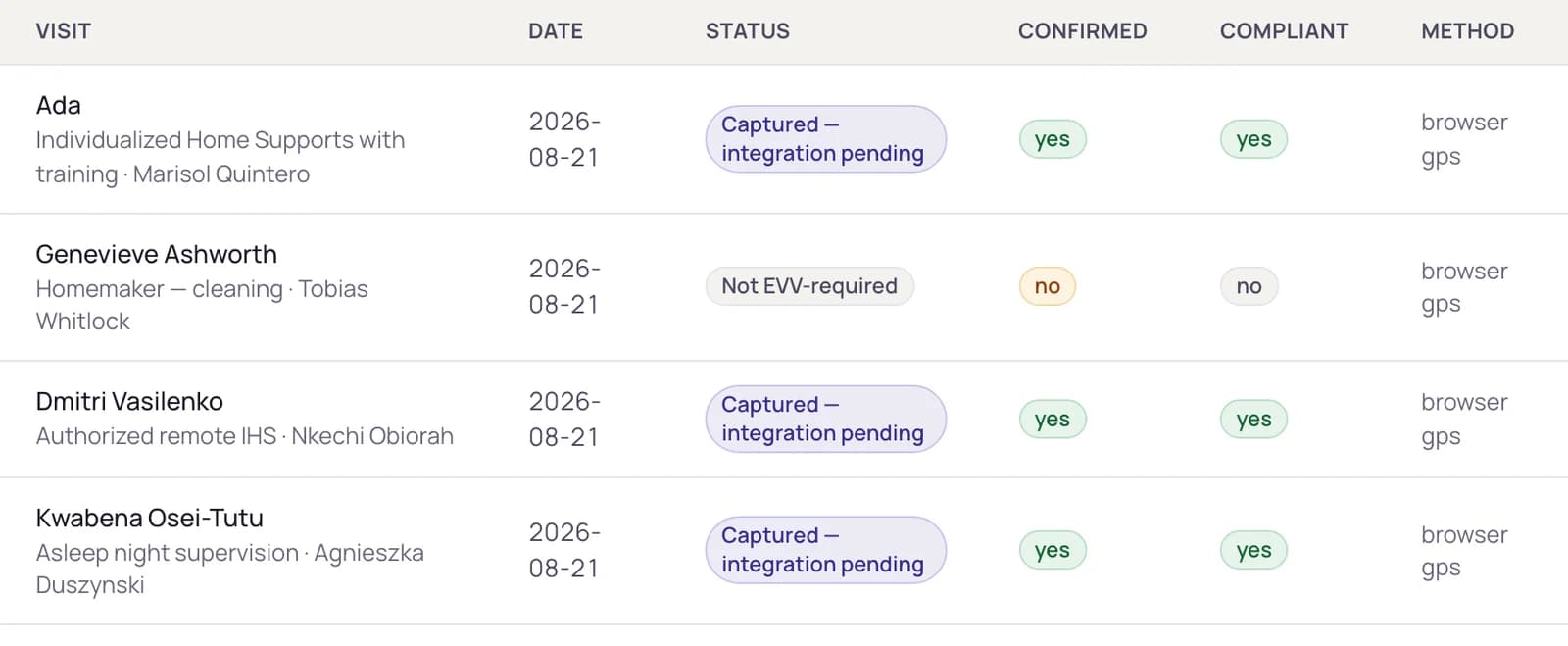
Verification first, billing second. The EVV state on each visit is exactly what decides whether that visit can be billed — so the two screens agree by construction.
Readiness, deliberately — not a clearinghouse
ClientCentric prepares the batch; the claims themselves go out through the billing path your agency already trusts — your biller, or direct entry into the state system. Billing codes come from your service agreements and are entered once in settings, never guessed by software. What changes is what arrives at that path: visits that are already verified, documented, coded, and inside authorization — with the export itself recorded in the audit history.
Written and maintained by the ClientCentric team from the working product. Last reviewed .